
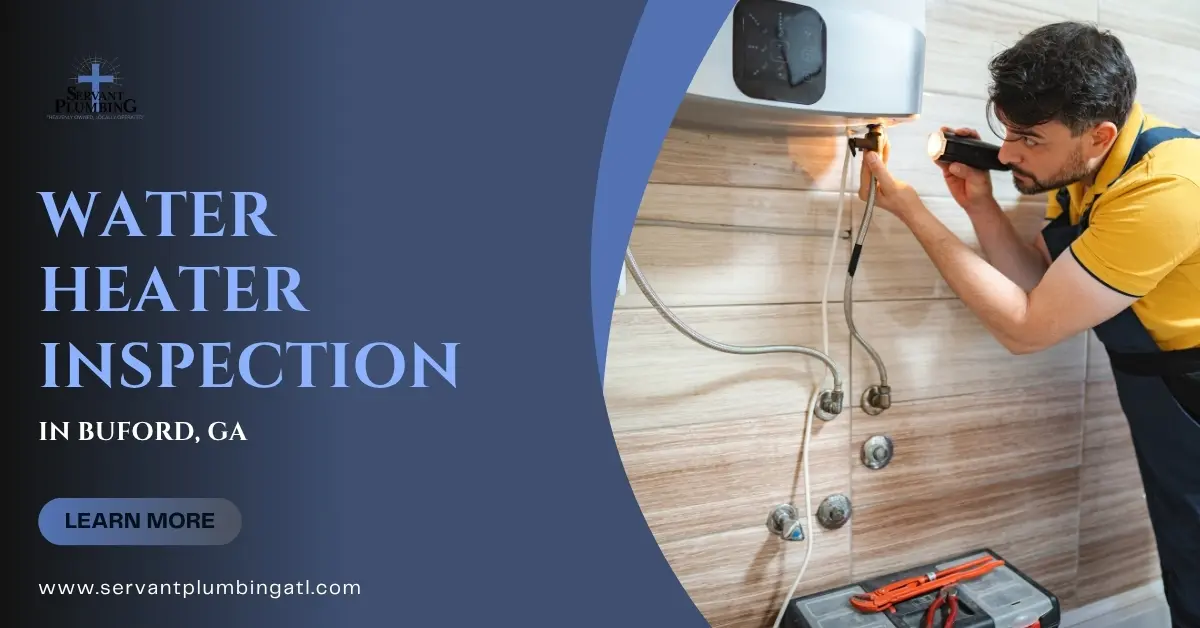
During a water heater inspection, a plumber checks your tank, valves, anode rod, heating parts, gas or power lines, and venting, then hands you a full report.
Did you book one this week? You are in the right spot. People who are buying or selling a home in Buford, GA will find this handy too. A lot of older homes off Hamilton Mill Road or near Friendship Road still run on tired tanks. We are here to keep it plain and simple, no jargon.
Key Takeaways
- A full inspection covers your tank, valve, anode rod, and heating parts.
- Most visits wrap up in 30 to 60 minutes.
- Plumbers follow a 10-point checklist for inspecting water heaters every time.
- Yearly checks catch leaks, sediment, and corrosion early.
- Costs sit between $75 and $400 based on your unit.
- Call a pro fast if you see rust, hear popping, or get lukewarm hot water.
What Is a Water Heater Inspection?
A water heater inspection is a hands-on safety and health check of your water heaters by a licensed plumber.
Small problems grow into big ones over time. The plumber spots issues most homeowners miss. They handle both tank and tankless units. A pro checks for rust, gas leaks, and weak parts before they fail.
How Long Does a Water Heater Inspection Take?
Most visits run 30 to 60 minutes from the time the plumber knocks to the final report.
A few things change that time:
- Tank age and sediment buildup
- Gas systems vs. electric heaters
- Tight spots like attics or basement corners
- Tankless units need extra time for a flush
A 12-year-old tank with heavy buildup takes longer than a newer one. Tankless heater flushes can push the visit past an hour.
What Does a Plumber Check During a Water Heater Inspection?
A full check covers 10 main spots, from the outside of the tank to the gas line or wiring.
These steps follow the order a real plumber uses on the job. They start outside the unit and work top to bottom. Here is what your plumber does, step by step.
Step 1: Visual Check of the Tank and Surroundings
The plumber walks around your unit first to catch trouble before opening anything.
They look for:
- Rust spots on the tank shell
- Water around the base or in the drain pan
- Wall stains from past water leaks
- Clutter blocking the unit
- Space from walls for adequate combustion air
Step 2: Checking the Temperature and Pressure Relief Valve (T&P Valve)
The TPR valve opens if the tank gets too hot or too high in psi.
Your plumber lifts the lever on the pressure relief valve. They listen for a quick burst of water into the discharge pipe. They check the valve for rust, drips, or stuck parts. A bad T&P valve is one of the most common failures on older water heaters. It is a primary safety part, so plumbers never skip it. The international plumbing code sets the limit at 150 psi or 210°F.
Step 3: Inspecting the Anode Rod
The anode rod is the metal stick inside your tank that rusts first so your tank does not.
Think of the galvanic anode like a sponge for corrosion. Your plumber pulls it out and checks how much is left. A thin or chewed-up rod means it did its job. If it is down to the wire core, they swap it out. Anode rod inspection matters in areas with hard water like Buford and Sugar Hill, where worn rods cause early tank failure before the warranty runs out.
Step 4: Looking at the Burner or Heating Elements
Your plumber checks how the unit makes heat, by combustion for gas or by power for electric.
For gas, they look at the burner flame. A healthy flame is steady blue, not yellow. Yellow means dirty combustion or carbon buildup. For electric units, they test both heating elements with a meter. A weak electrical element means slow heat and high bills. They also clean any soot or deposit they find.
Step 5: Checking the Thermostat Setting
Thermostat should sit at 120°F for safety and good energy efficiency.
The plumber checks the dial. Then they run hot water at a tap and use a thermometer to test real water temperature. Too high brings scald and burn risk. Too low feeds legionella bacteria. The 120°F sweet spot helps prevent scalding and trims your power bill.
Step 6: Flushing or Draining the Tank
A flush clears sediment that builds up at the bottom of the tank.
This step adds years to your unit. Mineral deposits steal heat, raise your bills, and chew up the steel. Your plumber drains a few gallons. They do a full flush if it has been skipped for years. In Buford, Suwanee, and Cumming, hard water leaves heavy buildup. An annual water heater flush is a smart move for every home around here.
Step 7: Testing the Gas Line or Electrical Connections
The plumber checks how the unit gets fuel, by gas or by power.
For gas units, your plumber sniffs the line and runs a soap bubble test around the gas shut-off. They also look at the shutoff valve and supply line. For electric units, your plumber checks the breaker and all wiring. They watch for burn marks or loose ends. Safety drives every move in this step.
Step 8: Checking the Venting (For Gas Units)
The vent or flue carries fumes out of your home.
Your plumber checks the chimney or vent for proper draft. They look for rust, holes, or backflow. Poor venting can affect carbon monoxide safety. Gas water heaters require clean flue gas flow at all times. Tankless gas units have their own venting checks too.
Step 9: Looking for Leaks, Rust, or Corrosion
The plumber checks every fitting, pipe, and tank base for any sign of moisture.
Small drips often turn into bigger ones over time. They look at:
- Cold and hot inlet pipe fittings
- The base of the storage water heater
- The expansion tank if you have one
- The water supply line and shutoffs
Many Buford homes hide units in finished basements or tight crawlspaces. Hidden moisture here can damage drywall and floors over time.
Step 10: Final Report and Recommendations
Your plumber walks you through what they found and what needs fixing.
They tell you what is fine, what to watch, and what needs work now. An honest pro from Servant Plumbing of North Atlanta never pushes a swap if your tank still has life left. Want clear numbers on tank lifespan? Check our guide on How Long Do Water Heaters Last?.
What Are the Signs You Need a Water Heater Inspection Right Away?
The biggest signs are rusty water, popping sounds, lukewarm showers, leaks around the base, and a unit older than 8 years.
Many homeowners spot these signs early but put off the call. That delay often costs more in the long run.
Red flags to watch for:
- Rusty or brown hot water from any fixture
- Popping, rumbling, or banging from the tank
- Lukewarm water no matter the thermostat setting
- Water pooling around the base
- Unit is 8 years or older
- Higher power or gas bills with no clear reason
- A vapor smell or rotten egg smell near the unit
For the full list, see Signs Yours Is on Borrowed Time.
How Often Should You Get a Water Heater Inspected?
Once a year is the right call for most homes, no exceptions.
Some setups need more frequent checks:
- Hard water areas: every 6 to 9 months
- Tankless units: yearly flushing is a must
- Units over 8 years old: twice a year
- Commercial water heater setups: every 3 to 6 months
North Atlanta homes deal with heavy minerals. Regular maintenance pays for itself in lower bills and fewer surprise calls.
How Much Does a Water Heater Inspection Cost?
Most inspections run between $75 and $400 based on what your unit needs.
Here is a quick price guide:
| Inspection Type | Average Cost |
| Basic visual inspection | $75 – $150 |
| Full inspection with flush | $150 – $300 |
| Tankless inspection and flush | $200 – $400 |
| Home inspection style report | $100 – $250 |
Some local pros, like Servant Plumbing of North Atlanta, offer free on-site estimates with no service fee.
What Should You Do After a Water Heater Inspection?
After a water heater inspection, fix any small issues right away, plan ahead for big repairs, and book your next visit in 12 months.
Here is a simple guide:
- All clear: book your next visit in 12 months
- Small issue: fix it soon (worn anode, loose relief valve, weak heating element)
- Big issue: get repair and replacement quotes
- End-of-life unit: plan a swap before it fails (10+ years, leak at the tank base)
Ask questions during the report. A good plumber will explain every line in plain words. Need a trusted name for water heater repair Buford GA? You know who to call.
FAQs
Can I inspect my water heater myself?
You can do a quick look for leaks and rust. Full safety checks, gas tests, and valve testing need a licensed plumber.
How long does a water heater last after an inspection?
A well-kept tank lasts 8 to 12 years. Tankless water heater units can hit 15 to 20 years with yearly care.
Is a water heater inspection part of a home inspection?
Most home inspector reports include a quick look. A full water heater inspection by a plumber goes much deeper.
Do tankless water heaters need inspections too?
Yes, every year. A tankless heater needs flushing to clear mineral deposits and keep water flow strong.
What happens if I skip yearly water heater inspections?
You risk leaks, low water pressure, higher bills, and early failure. Skipping checks often voids the warranty too.
Inspect Your Water Heater Through an Expert
A yearly water heater inspection is the simplest way to avoid leaks, cold showers, and surprise bills.
If your unit feels off, do not wait. Book a check with Servant Plumbing of North Atlanta today at (470) 573-6944. We proudly serve Buford and all of North Atlanta with honest, same-day help.
