
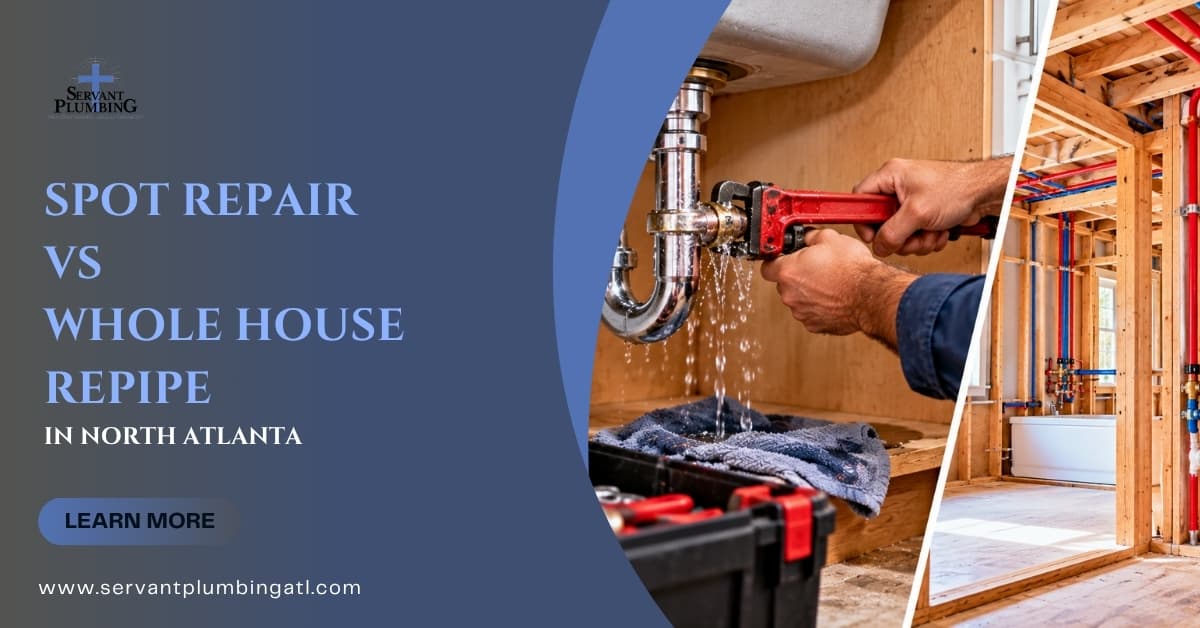
A single leak under the sink doesn’t mean your whole plumbing system is failing. With Spot Repair vs Whole House Repipe, the right choice depends on the cause and condition of your pipes. Pipes leak for small, unrelated reasons: a nail through drywall, a loose fitting, a cold snap. None of that points to a bigger problem.
But if that same leak shows up again somewhere else a few months later, that’s different. A second leak usually means whatever caused the first age, water quality, or the pipe itself is still working on the rest of the line. The real question is simple: is this leak a one-time accident, or the first sign your pipe is wearing out everywhere at once?
Spot Repair vs Whole House Repipe: The Key Differences
| Factor | Spot Repair | Whole House Repipe |
| What it fixes | Just the section of pipe that failed | Every supply line in the home |
| Best for | A single, isolated leak | Repeat leaks or aging pipe material |
| Home age | Usually under 20 to 30 years | Often built before 1980 |
| Pipe condition | The rest of the system checks out healthy. | The pipe material itself is wearing out |
| Typical cost | Lower, based on how hard the leak is to reach | $4,000 to $15,000 |
| Time to complete | A few hours to a day | 3 to 5 days |
| Water pressure | Normal everywhere else in the house | Often dropped house-wide |
| Water clarity | Clear at every faucet | Rusty, cloudy, or has visible sediment |
| Long-term outcome | Solves the one leak | Removes the root cause for good |
When a Spot Repair Is the Right Call
A spot repair fixes just the section of pipe that failed. It’s the right move when:
- Your home’s plumbing is newer, under 20 to 30 years old
- The rest of the pipe checks out fine, confirmed by a licensed plumber
- The leak came from something specific, like a nail through a wall, a loose fitting, or freeze damage
- This is the first leak you’ve had, not a repeat problem
- Water pressure and water clarity are normal everywhere else in the house
If your home matches this list, a spot repair solves the problem fully. Replacing a pipe that’s still healthy just to be safe isn’t a good use of your money.
When a Whole House Repipe Makes More Sense
A repipe replaces the supply lines through the entire home, usually with PEX or copper. It’s the right call when the problem isn’t one bad section, it’s the material itself. Watch for:
- A second or third leak in a different part of the house within a year or two
- Galvanized steel or old polybutylene pipe still in the home
- Water that runs rusty, cloudy, or with visible sediment
- Pressure dropped house-wide, not just at one faucet
- A home built before 1980 still running on its original lines
The pipe rarely fails in just one spot. The same water, the same minerals, the same age, and the same pressure act on the whole line at once. Once one section starts failing, the rest usually isn’t far behind.
FAQs
How many leaks does it take before a repipe makes more sense?
One leak in an otherwise sound system is usually just a repair. Two leaks on the same line within a year or two, especially with galvanised or older pipe, point toward a full repipe.
Can a plumber tell if more leaks are coming before they happen?
Not with certainty, but a pressure test and a visual check of the surrounding pipe give a good read on whether the rest of the system is healthy or showing early signs of the same problem.
Does a repipe add value if I’m selling my home?
Often yes. Buyers and inspectors both flag old galvanised or polybutylene pipe. A repipe with modern material removes that flag and can support your asking price.
How disruptive is a whole house repipe?
Most repipes take three to five days, with water shut off in stages so you’re not without service the whole time. Some wall or ceiling access is needed, but a good crew keeps the mess contained and patches access points once the job’s done.
Is it cheaper to just keep patching leaks as they come up?
Sometimes, if the leaks are truly rare and unrelated. But once you’re patching the same system a second or third time, the repeated cost plus the water damage risk usually adds up to more than a planned repipe would have.
Not Sure Which One Fits Your Home? Ask Us Directly
Servant Plumbing of North Atlanta checks the full system before recommending anything, spot repair or full repipe. We’ve made this call for homeowners across Buford and Gwinnett County for 25 years, and we only recommend the bigger job when the pipe itself makes the case for it.
