
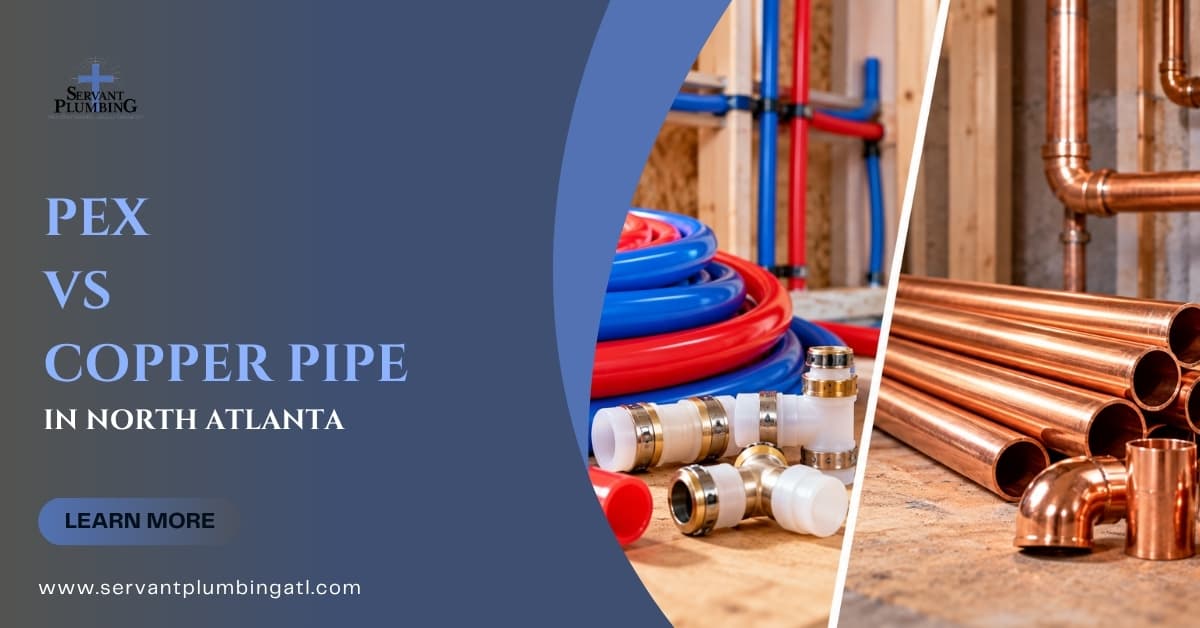
To be honest, PEX vs Copper Pipe comes down to what matters most for your home repipe. PEX beats copper for most home repipes. It costs less, goes in faster, and holds up well in real homes. Copper still wins on raw lifespan, but that extra life comes at a much higher price and a slower job.
So the real question is not which pipe lasts longer on paper. It’s which one fits your home, your budget, and your water. We’ve repiped homes across Gwinnett County for years, so here’s what actually matters when it’s your money on the line.
What PEX Pipe Is
PEX is a flexible plastic tubing. It bends around corners and fits into tight spaces without extra parts. Plumbers connect it with crimp or push-to-connect fittings instead of soldering it by hand. That’s the main reason PEX installs faster and costs less in labour.
What Copper Pipe Is
Copper is the pipe most older homes were built with. It’s rigid, and every joint needs soldering. It’s been the standard for decades, and that long track record is why people still trust it. It’s also why copper jobs take longer and cost more.
What is the difference between PEX vs Copper Pipe
| Factor | PEX | Copper |
| Cost per foot | $0.50 to $2 | $2 to $8 |
| Full repipe cost | $4,000 to $10,000 | $8,000 to $16,000 |
| Lifespan | 40 to 50 years | 50 to 70 years |
| Install time | 1 to 2 days | Several days longer |
| Joins with | Crimp or push-fit | Soldering |
| Works outdoors | No | Yes |
Cost per foot
This is the raw material cost before labour gets added. PEX tubing costs a fraction of copper pipe, and that gap holds true no matter where you buy it. Copper prices also swing more over time, since copper is a traded metal and its price moves with the market. PEX pricing stays more stable, which makes it easier to budget for ahead of time.
Full repipe cost
This is the total price for a typical whole-home job, material and labor combined. The gap between PEX and copper grows here, not just because of the pipe itself, but because copper takes longer to install and every extra hour adds to the labour bill. Home size, number of bathrooms, and how easy the walls are to access all affect the final number too, so get a written quote for your specific home rather than going off these ranges alone.
Lifespan
This is how long each material typically holds up under normal use. Copper has the longest rating on paper, and it’s earned that reputation over decades of real homes. But the number on paper assumes decent water conditions. Acidic water or high mineral content wears copper down faster than the rating suggests. PEX resists that kind of corrosion completely, so in homes with harder or more aggressive water, the real-world gap between the two materials often shrinks.
Install time
This is how long the crew needs to finish the job, from the first cut to the final pressure test. PEX bends into place with crimp or push-fit connections, so a plumber can run a full line without stopping to solder every few feet. Copper requires an open flame and a hand-soldered joint at every connection, which adds up fast on a whole-home job. Faster install also means less time your walls are open and less disruption to your daily routine.
Joins with
This is how each pipe actually gets connected at every fitting. PEX uses crimp rings or push-to-connect fittings, both of which snap or clamp into place without heat. That makes the process faster and removes any fire risk during the install. Copper requires soldering, which means heating each joint with a torch until the solder seals it. Soldering takes more skill, more time, and carries a small fire risk if it’s done near wood framing or insulation.
Works outdoors
This is whether the pipe can be used outside or exposed to sunlight. Copper handles outdoor exposure without any special protection and is a common choice for exterior hose bibs or exposed runs. PEX breaks down under ultraviolet light over time, so it has to stay indoors, underground, or fully covered. If your repipe includes any outdoor or exposed sections, those sections usually still get copper even if the rest of the home goes with PEX.
FAQs
Is PEX pipe safe for drinking water?
Yes. PEX is approved for drinking water across the U.S. and doesn’t add anything harmful to your water. It’s been used in North American homes since the 1990s and longer than that in Europe.
Can you mix PEX and copper in the same repipe?
Yes. Some homeowners run PEX through the main lines and keep copper on visible or outdoor sections. A licensed plumber can tell you where mixing the two makes sense for your home.
Does PEX lower my home’s resale value?
Not usually. Most buyers care more about whether the plumbing is new and working well than what it’s made of. A recent repipe, either material, is a selling point.
How long does a full repipe take?
A PEX repipe usually takes one to two days for an average home. A copper repipe takes several days longer because of the soldering at every joint.
Do I need a permit to repipe in Gwinnett County?
Yes. Gwinnett County requires a permit and a licensed plumber’s sign-off for a full repipe. Your plumber handles that paperwork as part of the job.
Thinking About a Repipe? Talk to Us First
Servant Plumbing of North Atlanta has repiped homes across Buford and Gwinnett County for 25 years, in both PEX and copper. We’ll look at your home, your water, and your budget, then give you an honest answer, not just the option that costs more.
To Get a Free Estimate Call us Now (470) 573-6944
